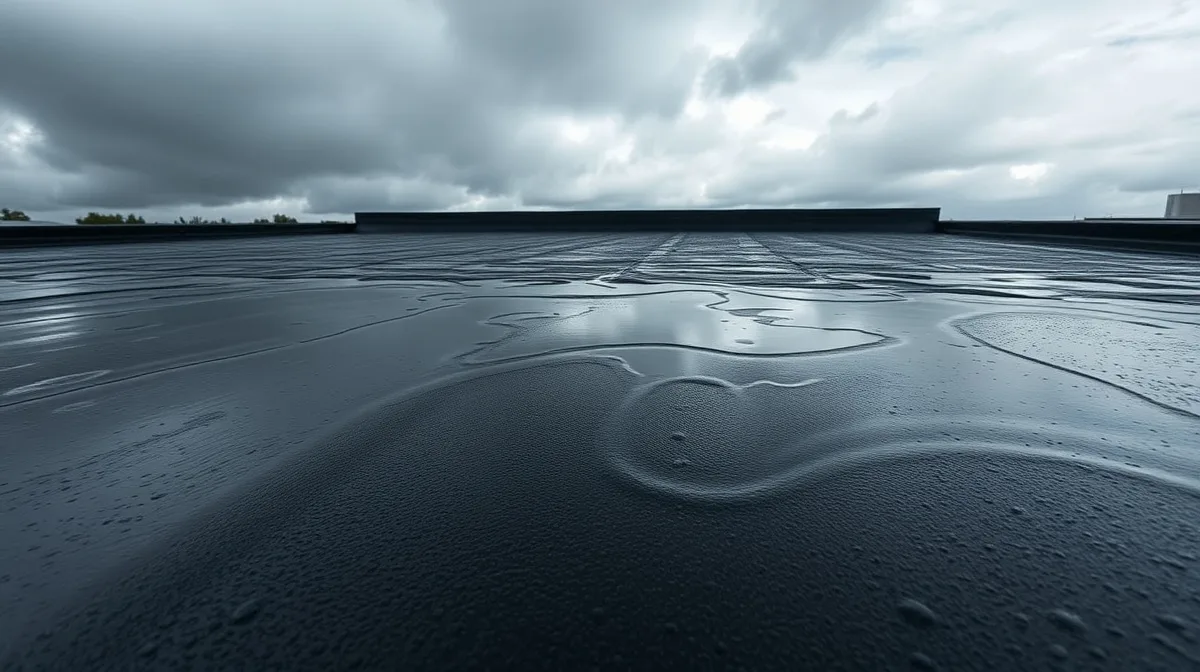
Why EPDM Roof Seams Fail (and How to Prevent It)
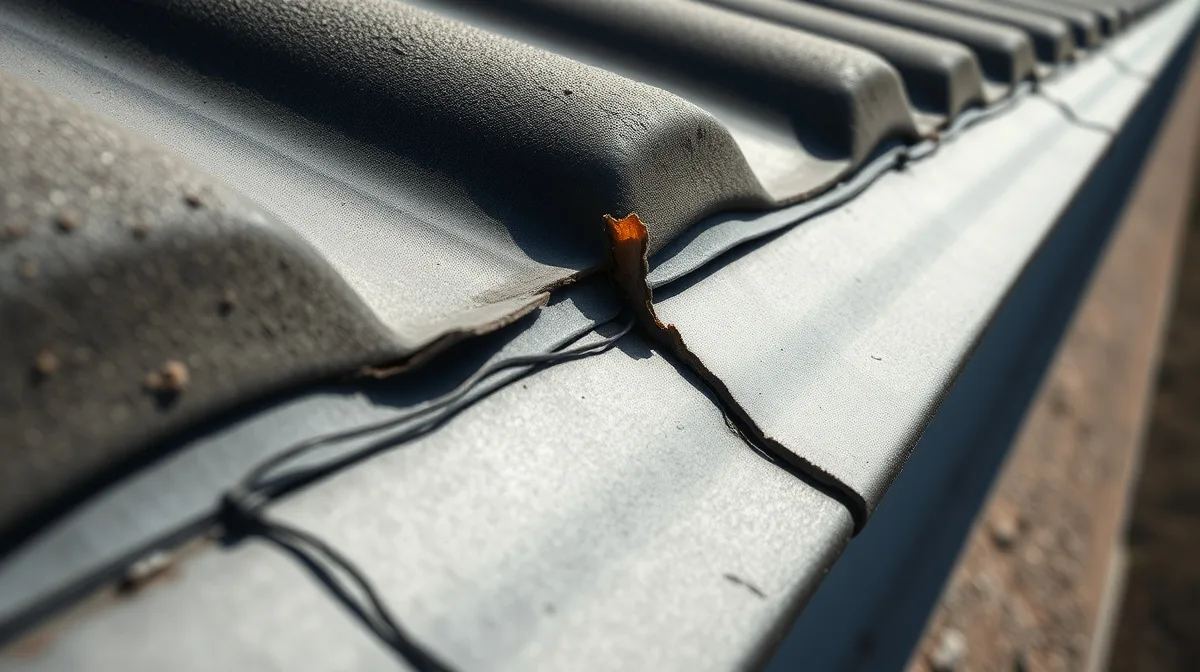
Ask any commercial roofing crew where an EPDM roof is most likely to leak, and the answer is almost always the same: the seams. Seam failure is the number one cause of EPDM roof leaks nationwide, and it isn't close. A rubber membrane can shrug off decades of sun, rain, and foot traffic and still fail at the exact spot where two sheets meet. Understanding why matters: it's the difference between catching a $300 patch early and paying for a much larger emergency repair after water reaches the deck.
EPDM membrane itself is durable — a seam is the weak point, because it's a bonded joint with a service life shorter than the material it's holding together. This guide covers why seams break down: adhesive chemistry, environmental stress, installation mistakes, and the inspection habits that catch failure while it's still cheap to fix.
The Adhesive Science Behind Every Seam
Older EPDM seams were joined with liquid contact adhesive, applied by hand and pressed together. Newer systems use factory-applied seam tape — a butyl- or acrylic-based adhesive laminated to a reinforcing strip, activated with pressure during installation. Either way, the bond depends on the adhesive staying flexible across two rubber sheets that expand, contract, and move independently for the next 15 to 20 years.
That's the core vulnerability. Adhesive is a chemical bond, and chemical bonds degrade under heat, UV radiation, and repeated mechanical stress. As it ages, it oxidizes and loses plasticity — going from flexible to stiff and brittle. A brittle adhesive can't absorb movement anymore; instead of flexing with the membrane, it cracks at the microscopic level, and those cracks slowly connect into a path water can travel through. This is why seam failure is rarely sudden — it's a gradual loss of elasticity that eventually shows up as a lifted edge, a gap, or a leak that seems to appear out of nowhere.
UV Exposure: The Slow Bake That Breaks Down Adhesive
A flat commercial roof gets more direct, sustained UV exposure than almost any other exterior surface, facing the sun nearly straight-on for most of the day, every day, for years. UV radiation attacks the polymer chains in adhesive the same way it fades a car's dashboard or breaks down an old garden hose — breaking molecular bonds and driving off the plasticizers that keep adhesive flexible.
The membrane field is formulated to resist UV far better than the adhesive under a seam. That mismatch means seams are consistently the first thing to show UV-related aging, especially at exposed cover-strip edges where adhesive gets direct sun instead of being sandwiched between membrane layers. On a roof with no recoat or seam maintenance in over a decade, UV-driven adhesive brittleness is a common root cause an inspector finds when tracing a leak to its source.
Thermal Cycling: The Daily Stress Test Every Seam Endures
Even without UV in the equation, EPDM roofs go through a temperature swing every day that most building materials never experience. A dark-colored membrane can hit surface temperatures well over 160°F under direct summer sun, then drop 60-80 degrees overnight or during a storm — a cycle that repeats daily, season after season, putting real stress on every seam.
A seam is the one place where that movement concentrates at a bonded edge instead of spreading across a continuous sheet. Over thousands of cycles, that flexing works on the adhesive bond like metal fatigue works on a bent paperclip — each cycle alone does nothing noticeable, but the cumulative effect shows up as seam edges that lift, curl, or separate at the corners. Combine years of thermal cycling with UV-brittled adhesive, and you get the failure mode this site sees most often: a seam that looks intact from a distance but is no longer sealed underneath.
- Daily expansion/contraction concentrates stress at bonded seam edges rather than across the membrane field
- Brittle, UV-aged adhesive has far less capacity to flex with that movement without cracking
- Seam edges and corners typically show the first visible signs — lifting, curling, or a slightly open gap
- Ponding water near a seam accelerates the damage by keeping the joint wet and adding UV-concentrating reflection
Poor Original Installation: Problems Built in From Day One
Not every seam failure is purely age and weather. A meaningful share of seam problems trace back to installation. Seam adhesive and tape both require a clean, dry, properly primed surface and consistent roller pressure across the full width of the seam. Skimped cleaning, thin or skipped primer, or uneven rolling can leave voids or weak spots from day one.
These weak spots don't always fail immediately — a marginal bond can hold for a few years before UV and thermal cycling finish what a rushed installation started. That's why a roof only 8-10 years old can still have active seam leaks: the membrane is fine, but the original seaming wasn't done to spec. It's also why a thorough contractor probes every seam during an inspection, not just the spot where water is currently showing up inside.
The Role of Regular Inspection in Catching Seam Failure Early
Because seam degradation is gradual, it's also catchable — if someone is actually looking. A seam that's starting to lose adhesion usually shows warning signs well before it leaks: slight lifting at an edge, a change in texture along the seam line, a cover strip starting to curl, or a faint gap you can feel with a probe tool even without visible daylight through it. None of these signs are dramatic, which is exactly why they get missed on a roof that only gets looked at once there's already water coming through a ceiling tile.
A scheduled inspection program — walking the full seam network on a set cadence, probing suspect areas, and documenting condition over time — catches these early-stage signs while the fix is still a simple re-taping or reinforced patch. Left alone, the same weak seam eventually opens fully, and what would have been a few hundred dollars in preventive work becomes a saturated insulation layer, deck damage, and an interior repair bill on top of the roof repair itself.
The takeaway for property managers and building owners is straightforward: seam failure is the predictable result of adhesive chemistry meeting sun, heat cycling, and time — sometimes compounded by installation quality from years earlier. It's a maintenance item, not a set-it-and-forget-it one. Regular probing inspections, prompt attention to lifting or curling seams, and quality re-taping work when adhesive starts to age out will keep a seam network performing for its full expected service life.
Frequently asked questions
The membrane field is a continuous, UV-stable rubber sheet, but a seam is a bonded adhesive joint holding two sheets together. Adhesive degrades faster than the membrane under UV exposure and loses flexibility over time, so it can no longer absorb the daily expansion and contraction the roof goes through. That mismatch is why seams are consistently the first failure point on an aging EPDM roof.
Most properly installed EPDM seams hold up well for roughly 15 to 20 years before UV exposure and thermal cycling noticeably degrade the adhesive bond. Poorly installed seams, or seams in areas with heavy ponding or unusually high UV exposure, can show problems well before that window closes.
In almost all cases, yes. A seam that's lifting or starting to separate is typically cleaned, re-primed, and reinforced with new seam tape or a cover strip in a targeted repair, rather than requiring membrane replacement. Full replacement only becomes the better option when seam failures are widespread across a large percentage of the roof.
A twice-yearly inspection schedule, in spring and fall, is the industry standard for catching seam issues while they're still inexpensive patch-level repairs. Buildings in high-UV climates or with a history of prior seam repairs benefit from more frequent probing, since early-stage lifting rarely shows visible signs of an active leak.
Ready for a free repair estimate?
Tell us about your roof and we'll build a clear, no-pressure estimate.