EPDM Puncture & Blister Repair
From a dropped tool to a wind-blown branch to a blister that finally splits open, punctures and blisters are the second-leading cause of EPDM leaks behind seam failure — and both are repairable without a tear-off.
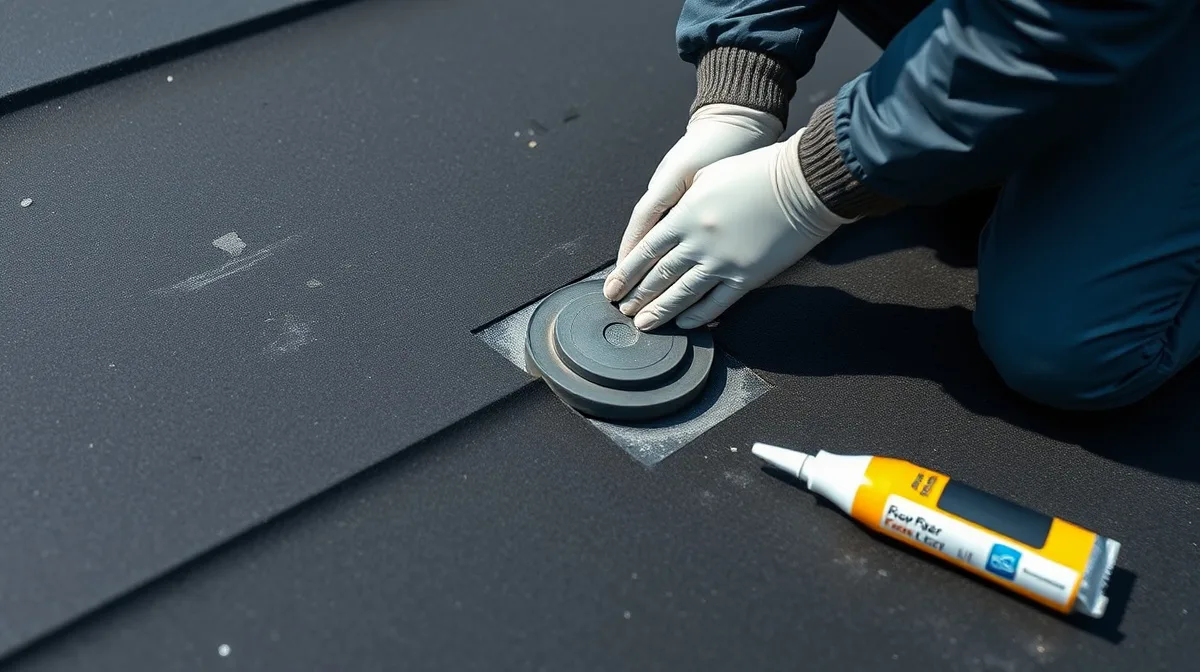
A rubber membrane can absorb a surprising amount of abuse, but it isn't immune to it. Foot traffic from HVAC technicians, satellite installers, and other trades crossing the roof wears thin spots into the membrane over time. Falling debris, hail impacts, and dropped tools during rooftop maintenance can puncture EPDM outright, leaving a clean tear or a gouge that lets water straight into the insulation below. None of this is a defect in the material itself — EPDM is a durable, proven membrane — but every roof that gets walked on and serviced regularly will eventually pick up mechanical damage somewhere in the field.
Blistering is a different mechanism with the same end result. Moisture or gas trapped between the membrane and the substrate — often from incomplete adhesive coverage during original installation, or from vapor migrating up through wet insulation — expands and contracts with roof temperature, working the membrane loose from what's underneath it. A blister that looks cosmetic today is a stress point that eventually cracks, splits, or gets punctured by the next foot that lands on it. We diagnose and repair both problems the same way we approach every EPDM service: identify the actual cause, patch it with the method that fits the damage, and document what we did so it's on record for your maintenance file.
Why property owners choose it
- A properly bonded EPDM patch restores the membrane's watertight integrity at the damage site without disturbing the surrounding roof.
- Catching punctures and blisters early prevents wet insulation, deck damage, and interior finish repairs that cost far more than the roof repair itself.
- Cured-patch and liquid-applied methods both use fully compatible EPDM materials, so the repair ages at the same rate as the rest of your membrane.
- Crews document every patch location with photos, so your maintenance file shows exactly what was repaired and when.
- Repairs are scheduled around your building's operations, minimizing disruption to tenants, staff, or warehouse activity below the roof deck.
- Addressing mechanical damage and blisters as they appear extends the useful life of the whole membrane and delays the cost of full replacement.
How Punctures Happen on an EPDM Roof
Most punctures trace back to rooftop activity rather than the membrane failing on its own. HVAC and mechanical contractors dragging equipment, ladders, and tool bags across the roof are the most common source, especially around units that get serviced several times a year. Falling debris — tree limbs, wind-blown construction material from neighboring sites, or hail in a bad storm — accounts for most of the rest. Sharp punctures are usually easy to spot: a clean tear, a gouge down to the scrim reinforcement, or a hole where something landed with force. Slower mechanical wear looks different — thinning, scuffing, or a worn track where the same path gets walked repeatedly.
The size and shape of the damage determines the repair approach. A clean, isolated puncture a few inches across is usually the fastest fix. Larger tears, damage near a seam or penetration, or a cluster of punctures in one traffic area may call for a broader patch or a walkway pad added afterward to prevent a repeat. Either way, the fix only holds if the membrane around the damage is sound — our crews check the surrounding area for hidden thin spots or early blistering before closing out the repair. Where a specific access route or equipment pad keeps taking damage, we'll flag it and recommend a permanent walkway pad or protective mat rather than patching the same spot again on the next service visit.
- HVAC and mechanical service traffic
- Dropped tools and equipment during rooftop work
- Wind-blown debris and tree limbs
- Hail impact damage
- Worn foot-traffic paths near rooftop access points
What Blistering Means (and Why You Shouldn't Ignore It)
A blister is trapped air, gas, or moisture pushing the membrane away from the substrate underneath it. Some form during original installation, when adhesive coverage was incomplete and a pocket of air got sealed in. Others develop later, when moisture already present in the insulation heats up and expands on a hot day, then contracts overnight — a cycle that repeats and gradually enlarges the weak spot. Either way, a blister is a membrane that's no longer fully adhered, which means it's more exposed to wind uplift, foot traffic, and UV stress than the rest of the roof.
Small, firm blisters that aren't growing can sometimes be monitored through a maintenance program rather than repaired immediately. But a blister that's soft, spongy, growing, or located in a traffic area is a near-term failure point — it's usually only a matter of time before it splits or gets punctured. We check blisters for trapped moisture versus trapped air, since that distinction affects whether the fix is a simple patch or whether it points to wet insulation underneath that needs a closer look before we close it back up. A blister survey during a scheduled inspection also gives you a baseline — noting size and location now makes it easy to tell at the next visit whether a given blister is stable or getting worse.
Patch Methods: Cured EPDM Patch vs. Liquid-Applied Repair
For most clean punctures and blisters, a cured EPDM patch is the standard fix: the damaged area is cleaned and primed, a cured (fully vulcanized) EPDM patch is cut to size with rounded corners, and it's set with compatible seam adhesive and rolled down for full contact. Done correctly, this creates a bond as durable as a factory seam and blends into routine maintenance without standing out as a repair. It's the right call for regular shapes, isolated damage, and most day-to-day puncture and blister repairs.
Irregular damage — a jagged tear, a cluster of small punctures, or a repair around a tight penetration where a cut patch won't lay flat — is often better served by a liquid-applied EPDM repair. A liquid rubber compound is brushed or rolled directly over the damaged area and any reinforcing fabric, curing into a seamless, fully bonded membrane that follows odd shapes without seams of its own. Liquid-applied repairs are also useful when a small cluster of failure points is better addressed as one continuous fix rather than several separate patches. Either method is selected based on the specific damage in front of the crew that day, not a one-size-fits-all default — the goal is a repair that holds up as long as the surrounding membrane, not the fastest patch available.
- Cured EPDM patch with seam adhesive — best for clean, regular-shaped damage
- Liquid-applied repair with reinforcing fabric — best for irregular or clustered damage
- Both methods use EPDM-compatible materials that age consistently with the existing membrane
Ideal for
- Roofs with visible tears, gouges, or punctures from foot traffic, dropped tools, or storm debris
- Rooftop units and equipment pads where HVAC service crews regularly cross the membrane
- Buildings with soft, raised, or bubbled sections of membrane that indicate trapped moisture or gas
- Properties in hail-prone regions needing post-storm damage assessment and patch repair
- Facility managers who want isolated damage fixed now rather than waiting for it to become an interior leak
What affects the cost
Puncture & Blister Repair questions, answered
Yes — a clean puncture or tear is one of the most straightforward EPDM repairs, and in most cases a cured patch or liquid-applied repair restores the area completely. Replacement only becomes the better option when punctures are widespread across an aging membrane rather than isolated.
Not usually, but it shouldn't be ignored either. A firm, stable blister can often wait for a scheduled repair, while a soft, growing, or split blister in a traffic area should be addressed quickly before it becomes an active leak.
Blisters form when air, gas, or moisture gets trapped between the membrane and the substrate, usually from incomplete adhesive coverage during installation or from moisture in the insulation expanding with temperature changes. Repeated heating and cooling cycles cause the trapped pocket to grow over time.
A cured patch is a pre-vulcanized piece of EPDM set with seam adhesive, best suited to clean, regularly shaped damage. A liquid-applied repair is a brushed-on rubber compound that cures in place, which makes it a better fit for irregular tears or a cluster of smaller damage points.
A properly installed patch, using compatible EPDM materials and correct adhesive prep, generally lasts as long as the surrounding membrane rather than failing early — often 10-15+ years depending on the age and condition of the rest of the roof.
Puncture & Blister Repair done right, by a dedicated EPDM repair crew
Puncture & Blister Repair isn't a commodity — the result depends entirely on how carefully it's diagnosed and repaired. We inspect the roof, identify the actual cause (not just the symptom), and repair to the standard that keeps a roof performing for years, not months.
We serve commercial, industrial, retail, multifamily, and institutional properties nationwide — no fixed local footprint means no compromise on responsiveness. Every job starts with a free, no-pressure roof inspection.
Just as important, we treat your roof as a system. Seam condition, membrane age, drainage, and flashing all interact — fixing one while ignoring another leaves the door open for the next leak. When we scope your puncture & blister repair, we look at the whole roof, so the finished result actually holds up.
Free inspection
We evaluate your roof and give you a clear, itemized estimate with no pressure.
Expert repair
We diagnose and repair your puncture & blister repair to spec — clean and on schedule.
A roof you can trust
A durable repair and honest guidance on what it takes to keep your roof watertight.
Related services
Ready for a free puncture & blister repair estimate?
Tell us about your EPDM roof and we'll put together a clear, no-pressure repair estimate — commercial or industrial, anywhere in the country.