EPDM Roof Repair Cost Guide 2026: What Commercial Property Owners Should Expect

An EPDM roof repair estimate can land anywhere from a few hundred dollars for a single seam patch to well into five figures for extensive membrane restoration across a large industrial building. That spread is real, and it's exactly why so many facility managers and building owners researching EPDM roof repair cost end up with more questions than answers after an hour of searching. Most commercial roofing sites either quote a single number that doesn't apply to your building, or refuse to give any numbers at all and push straight to "call for a quote."
This guide takes a different approach. We're going to walk through real, validated national cost ranges for the specific repair types that actually show up on EPDM rubber roofs — seam repair, puncture and blister patching, flashing and penetration repair, and full recoating — then compare those numbers against full EPDM replacement so you can see where repair stops making sense. We'll also introduce a framework nobody else in this space publishes: the repair-vs-replace cost crossover point, a way to think about cumulative repair spending against replacement cost so the decision isn't a gut call. Every figure here is a national range, not a quote. Your roof's exact price depends on an on-site inspection, which is the only way to firm up a number for your specific building.
What Actually Drives the Cost of an EPDM Roof Repair
Two roofs with the identical square footage and the identical type of damage can come in at very different price points once a crew is actually on the deck. Pricing an EPDM repair isn't just "square footage times a rate" — it's a function of how hard the roof is to work on, how old and how compromised the membrane already is, and how much of the roof is actually affected. Understanding these three variables is the single best thing you can do before you call a contractor, because it tells you which end of the range your building is likely to fall into before anyone climbs a ladder.
- Roof access: A single-story retail box with a roof hatch and a short ladder run costs less to mobilize on than a five-story building needing a crane, boom lift, or scaffold and safety tie-off setup for the crew.
- Membrane age and general condition: A 6-year-old membrane with one isolated puncture is a straightforward patch. An 18-year-old membrane that's chalking, shrinking, and pulling at multiple seams turns a "simple" repair into a larger scope once the crew starts probing.
- Extent of damage: One seam split is a $300-$1,500 line item. Widespread seam failure across multiple roof sections, or damage that's already reached the insulation and deck, moves into the $4-$12 per square foot general repair bracket or higher.
- Roof geometry and equipment density: Roofs with a lot of HVAC curbs, pipe penetrations, skylights, and parapet transitions have more linear feet of flashing detail per square foot of field membrane, and flashing details are consistently the most labor-intensive part of any repair.
- Ponding water and drainage condition: Repairing a puncture inside a ponding area often requires drainage correction (tapered insulation, a cricket, or an added drain) alongside the patch itself, which adds scope beyond a simple membrane repair.
- Access to the interior for moisture verification: If there's already active interior leaking, crews often need to verify how far moisture has traveled through the insulation before finalizing the repair scope, which can add inspection time and, occasionally, wet insulation replacement.
EPDM Repair Costs by Type
Below are the four repair categories that make up the vast majority of EPDM service calls, with the national pricing range for each. These are typical ranges based on the scope of work involved, not a fixed price list — the same repair type can land at either end of its range depending on the access and condition factors above.
Seam Repair: $300-$1,500 per Repair
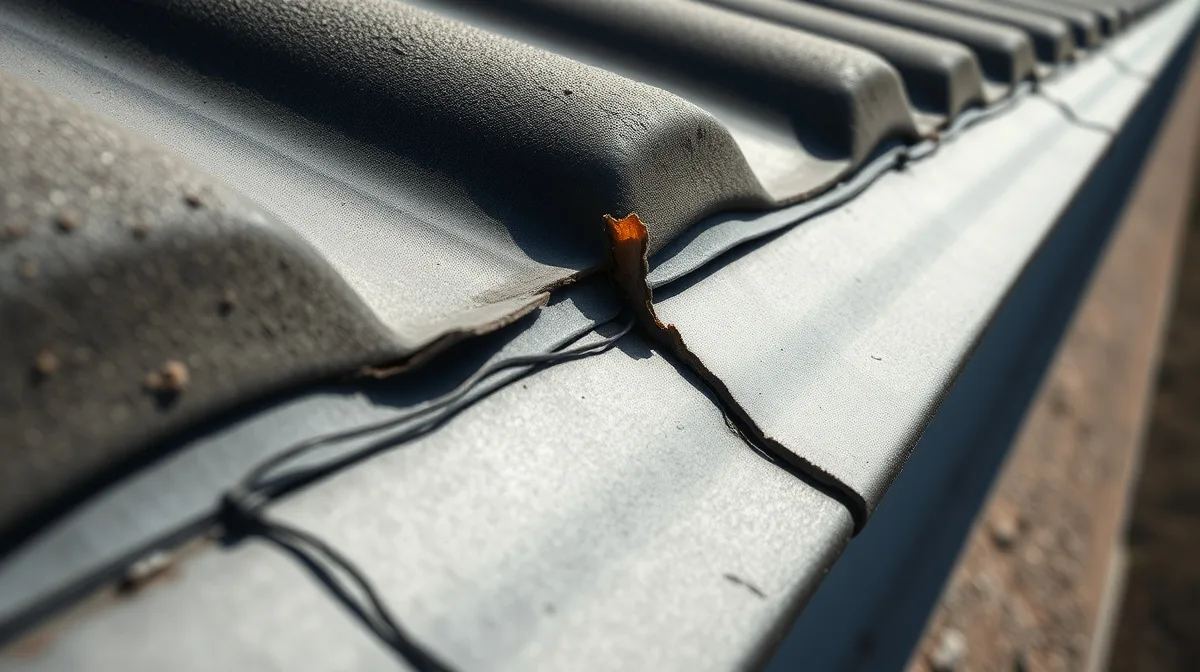
Seam failure is the number one cause of EPDM roof leaks, and it's also the most common single repair call a crew runs. Glued and taped seams are designed to hold for the life of the membrane, but they degrade over roughly 15-20 years from UV exposure, thermal expansion and contraction cycling, and — on some older roofs — inconsistent original installation. A typical seam repair involves probing the seam to find the full extent of the separation, cleaning and priming the exposed surfaces, and installing a reinforced seam tape or cover strip over the repaired section. A single, isolated seam repair on an easily accessible roof runs toward the lower end of the range; a seam repair that requires probing several feet in either direction to find where the adhesive bond is still sound pushes toward the higher end.
Puncture and Blister Patch Repair
Punctures come from foot traffic, dropped tools, HVAC servicing, hail impact, or debris. Blisters form when moisture or gas gets trapped between the membrane and the substrate and pushes the rubber up into a bubble that eventually splits under UV stress and foot traffic. Straightforward puncture and blister patches — using a cured EPDM patch and compatible adhesive, or a liquid-applied repair for irregularly shaped damage — typically fall in the same $300-$1,500 per-repair range as seam work when it's a single, contained area. Where puncture and blister repair moves into the broader $4-$12 per square foot general repair bracket is when a roof has multiple scattered blisters or punctures across a wide area, which turns a one-off patch call into a full repair campaign across the field membrane.
Flashing and Penetration Repair
Flashing details — parapet walls, HVAC curbs, pipe boots, roof drains, skylight curbs — are consistently the highest-leak-risk zones on any low-slope roof, EPDM included, because they're where the membrane has to transition around something rather than lying flat. Flashing repair costs track with the general commercial repair range of roughly $4-$12 per square foot of affected detail, though small individual items like a single pipe boot replacement can sometimes be priced closer to the per-repair range if it's an isolated fix. Larger flashing scopes — re-flashing an entire parapet run, or correcting several HVAC curb details on the same service call — tend to land in the $4,000-$8,000+ major repair bracket once labor, new flashing material, and any necessary metal work are factored in.
Full EPDM Recoating
Recoating sits between a targeted patch and full replacement. A liquid-applied EPDM-compatible coating (or a comprehensive seam-tape restoration system) goes over the entire existing membrane, sealing minor surface degradation, reinforcing seams broadly rather than one at a time, and extending usable roof life by five to ten years or more without a tear-off. Because recoating covers the full roof area rather than a single defect, it's priced by total square footage and generally falls within the same $4-$12 per square foot general commercial EPDM repair range, with the final number depending heavily on membrane prep work needed (cleaning, priming, pre-treating any seams or blisters) before the coating goes down. Recoating is not a fix for a membrane that's already failing structurally — it's a life-extension option for a membrane that's aging but still fundamentally sound.
When Repair Work Gets Bigger: The $4,000-$8,000+ Bracket
Not every EPDM repair fits neatly into a per-repair or per-square-foot line item. When a roof has widespread seam failure across multiple sections, a flashing system that needs a full rework, or a section of membrane that's deteriorated badly enough to need partial replacement rather than a patch, the project moves into a major membrane repair bracket — typically $4,000-$8,000 and up, scaling with the size of the affected area. This bracket is where the line between "repair" and "replace" starts to blur, and it's exactly the zone where the cost framework in the next section matters most. A $6,000 partial repair on a roof that's otherwise sound is money well spent. The same $6,000 repair on a roof that already has two or three prior major repairs behind it is a different conversation.
Repair Cost vs. Full EPDM Replacement Cost
Full EPDM replacement — complete tear-off of the old membrane and insulation, deck inspection and repair, and installation of a new EPDM system — runs roughly $7-$15 per square foot nationally, depending on insulation thickness, deck condition, flashing scope, and building height/access. That's a meaningfully higher per-square-foot number than the $4-$12 range for general repair work, which is exactly why repair is almost always the right first move on a roof that isn't structurally compromised. The catch is that repair costs are recurring and replacement costs are (mostly) one-time. A roof that needs a $1,200 seam repair every year for six years has spent $7,200 solving the same underlying seam-degradation problem over and over, without ever addressing the membrane that's actually causing it.
- Minor seam/patch repair: ~$300-$1,500 per repair, as-needed
- General commercial EPDM repair work: ~$4-$12 per sq ft, scope-dependent
- Major membrane repair or partial replacement: ~$4,000-$8,000+
- Full EPDM replacement (for comparison): ~$7-$15 per sq ft
The Repair-vs-Replace Cost Crossover Point
This is the question almost nobody in this industry answers directly: at what point does continuing to repair an EPDM roof stop being the financially smart move, and full replacement take over as the better option? The honest answer is that there's no single dollar figure that applies to every building, but there is a usable framework, and it's built on comparing cumulative repair spending against the cost of full replacement rather than looking at any one repair bill in isolation.
Start by estimating your full replacement cost using your roof's square footage at the $7-$15 per square foot range. That number is your ceiling. Then track what you've actually spent on EPDM repairs — seam work, patches, flashing fixes, any partial section replacements — over the last three to five years. When that cumulative repair total starts approaching roughly 30-40% of the full replacement cost, and the membrane is already past the 15-20 year mark where seam adhesive naturally begins failing, replacement starts to outperform repair on a pure cost basis. Below that threshold, especially on a membrane under 15 years old, repair almost always remains the better financial call — you're paying to fix isolated problems on a membrane that still has years of useful life left, at a fraction of the replacement cost.
The crossover point isn't just about the percentage, either — it's about what the repair history is telling you. One or two seam repairs over a decade on an aging-but-otherwise-sound membrane is normal maintenance, not a warning sign. Three or more repair calls in a two-year window, especially if they're recurring at the same seams or spreading to new sections of the roof, is a signal that the membrane's adhesive bond is failing broadly rather than in one isolated spot — and that's the scenario where the next "small" repair often turns into the first of many, pushing you past the 30-40% cumulative-cost threshold faster than expected.
- Below ~30% of replacement cost spent cumulatively, membrane under 15 years old: repair is almost always the right call.
- Approaching ~30-40% of replacement cost spent cumulatively, membrane 15-20+ years old, repairs recurring or spreading: replacement starts to win on cost.
- Above ~40% of replacement cost already spent, with ongoing interior leaks or ponding water in the same areas repeatedly: replacement is very likely the better long-term financial call.
Repair-vs-Replace Factors Beyond the Cost Math
Cost is the number facility managers usually lead with, but it's not the only input into a sound repair-or-replace decision, and an honest contractor will walk through all of these with you rather than defaulting to whichever option is more profitable for them.
- Age of the membrane: Under 10-12 years, repair is almost always appropriate. Past 18-20 years, the membrane is approaching the end of its expected service life regardless of how well it's held up.
- Percentage of roof affected: Isolated damage on 5-10% of the roof area favors repair. Degradation spread across 25% or more of the field membrane starts favoring replacement, since patch-by-patch repair on that scale rarely costs less than a coordinated recoat or replacement.
- Number of prior repairs: A roof with a clean repair history is a good repair candidate. A roof with a thick repair-ticket file, especially recurring seam calls, is telling you something about the underlying membrane condition.
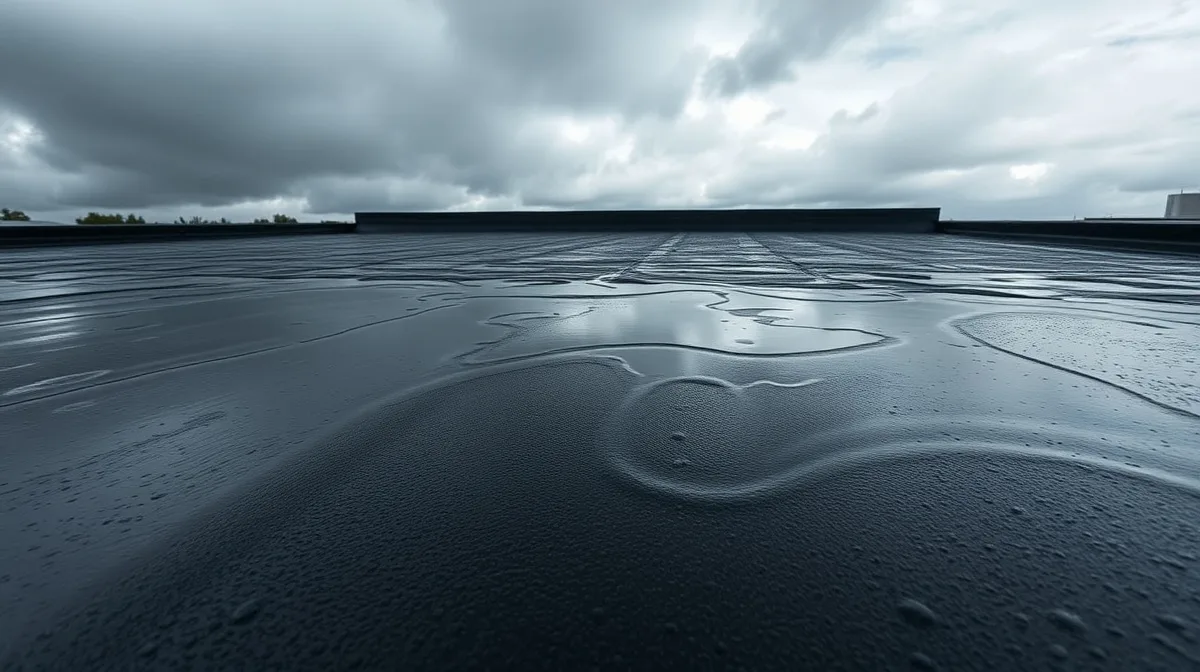
- Extent and duration of ponding water: Ponding that clears within the 48-hour industry standard is normal. Ponding that sits longer and recurs in the same low spots accelerates membrane breakdown and often needs a drainage correction alongside any repair.
- Insulation moisture content: This is the one factor a visual inspection alone can't catch. Wet insulation under the membrane keeps degrading the roof system from below even after a surface patch is complete, and it's often the deciding factor between a targeted repair and a full section replacement.
What to Ask a Contractor for in a Quote
A vague one-line quote — "roof repair, $X" — doesn't give you enough information to compare bids, plan a budget, or know whether you're getting a patch or a full fix. A quote worth acting on should break the project down clearly enough that you could hand it to a CFO or a building owner and have them understand exactly what they're paying for.
- A specific description of the repair scope: which seams, which penetrations, which sections of membrane, not just "roof repair."
- Square footage or linear footage of the actual repair area, not just the total roof size.
- Whether the price includes moisture testing or a core cut to check insulation condition before work begins.
- Materials being used — cured EPDM patch vs. liquid-applied repair, reinforced tape brand/type — and why that choice fits your specific damage.
- Whether the quote is a firm price or an estimate subject to change once the crew opens up the affected area.
- What documentation you'll receive afterward — photos, a written scope-of-work summary, and any report suitable for your own maintenance records or your insurer's requirements.
- Expected repair lifespan — a professionally executed seam repair or patch should come with a realistic expectation of how many years it should hold.
The bottom line: EPDM repair costs are genuinely predictable once you know which category your damage falls into. A single seam or puncture is a $300-$1,500 conversation. Broader repair work across the field membrane or flashing system runs $4-$12 per square foot. A major repair or partial replacement scope lands at $4,000-$8,000 or more. And full replacement, for comparison, runs $7-$15 per square foot. None of those numbers replace an actual inspection of your specific roof, but they're enough to walk into a contractor conversation knowing whether a quote is in the right neighborhood — and to start tracking where your building sits on the repair-vs-replace cost curve before the decision gets made for you by a failed membrane.
Frequently asked questions
It depends on the type of repair. A single seam or puncture repair typically runs $300-$1,500. Broader repair work across a larger area of membrane or flashing generally falls in the $4-$12 per square foot range, and major membrane repair or partial replacement runs $4,000-$8,000 or more. An on-site inspection is the only way to get a firm number for your building.
Almost always, at least for an individual repair. Full EPDM replacement runs roughly $7-$15 per square foot nationally, well above the $4-$12 per square foot range for general repair work. The exception is a roof with heavy, recurring repair history — at that point, cumulative repair spending can start to approach a meaningful share of replacement cost, which is the crossover point worth tracking.
It's the point where cumulative repair spending on a roof — added up over several years — starts approaching roughly 30-40% of what full replacement would cost, especially on a membrane already past the 15-20 year mark. Below that threshold, repair usually remains the better financial call; above it, especially with recurring or spreading damage, replacement tends to win on cost.
Roof access, membrane age and condition, and how much of the roof is actually affected all move the price within the same repair category. A ground-accessible single-story roof with one isolated seam split will price very differently than a multi-story building with the same size defect but a harder mobilization and older, more brittle membrane around it.
Many EPDM repair contractors offer a free on-site inspection as the first step, since it's the only reliable way to scope the actual repair and give you a firm number instead of a broad range. Be cautious of any quote given without someone actually walking the roof — hidden damage under the membrane surface can change the scope significantly.
Ready for a free repair estimate?
Tell us about your roof and we'll build a clear, no-pressure estimate.