EPDM Roof Repair vs. Replacement: A Decision Guide for Facility Managers

Every facility manager with an EPDM roof past its fifteenth year eventually gets asked the same question by someone upstairs: are we fixing this roof again, or are we finally replacing it? The honest answer is almost never as simple as membrane age. It's a combination of age, how the roof has behaved under repair, what a moisture scan actually shows underneath the membrane, and where your capital budget cycle sits relative to when failure becomes likely. This guide walks through each of those inputs so you can make the call with data instead of gut instinct, and so you can defend that call to ownership or a CFO who wants a number, not a feeling.
Age Alone Is a Starting Point, Not a Verdict
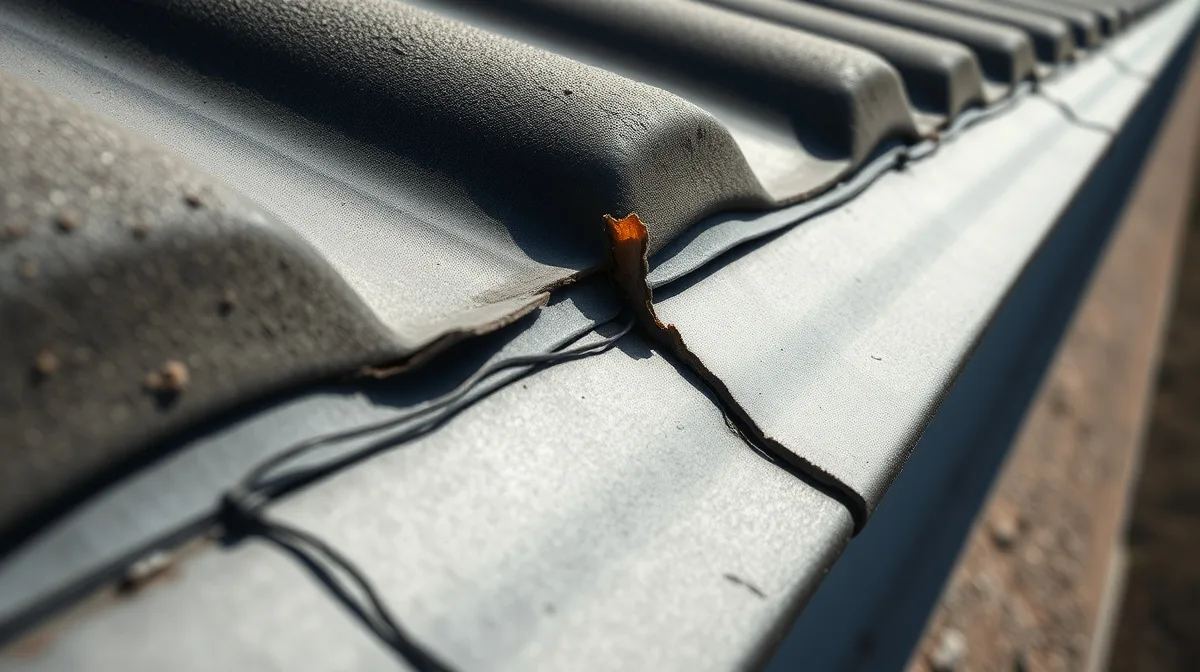
EPDM membranes are typically rated for 20-30 years, but the seams — glued or taped laps between sheets — are the weak point, and they degrade on a shorter timeline: roughly 15-20 years depending on UV exposure, thermal cycling, and how well the original installation was executed. That means a 12-year-old roof with a handful of isolated seam issues is almost always a repair. An 18-22 year-old roof with widespread seam lifting across multiple sections is entering the zone where repair still works, but the math starts shifting. Past 22-25 years, especially with the original seams still in place, you're generally extending the life of an asset that's already past its intended service window, and every dollar spent needs to be evaluated against how many more years it's realistically buying you.
- Under 15 years: repair is almost always correct, assuming isolated damage
- 15-20 years: repair remains viable, but track repair frequency closely
- 20-25 years: repair-vs-replace decision point — history and moisture data now matter more than the age number itself
- 25+ years: replacement should be actively budgeted, even if the roof isn't leaking today
Repair-History Red Flags
A roof's repair log tells you more than a single inspection ever will. One or two seam repairs a year on a large roof is normal maintenance — that's what a membrane this age is supposed to need. What changes the conversation is the trendline. If you're calling for repair visits more than twice a year, if the same general area keeps reopening after being patched, or if new leak locations keep appearing in sections that were never flagged before, the membrane is telling you it's failing broadly, not locally. At that point, individual patches are treating symptoms while the underlying adhesive and membrane chemistry continue to break down across the whole field.
- Repeat repairs at the same seam or patch location within 12-18 months
- Rising annual repair-call frequency over a 3-year window
- New leak locations appearing in previously undamaged areas
- Repairs required after routine storms that a healthy roof would shed without issue
- Insulation feeling spongy or soft underfoot near repair zones during inspection
What a Moisture Scan Actually Tells You
Surface inspection shows you where the membrane has already failed. An infrared or nuclear moisture scan shows you where water has already gotten into the insulation, which is a different and more serious problem. Wet insulation doesn't dry out on its own under a rubber membrane — it stays saturated, loses R-value, adds dead weight to the deck, and creates conditions for deck corrosion or rot that a surface patch does nothing to address. A scan showing isolated wet pockets under 5-10% of the roof area is a repair scope: cut out the wet insulation, dry in the deck, replace insulation, patch the membrane. A scan showing 25%+ of the field with elevated moisture readings is a different conversation entirely — at that point you're not repairing a membrane, you're managing a saturated insulation system, and replacement is very likely the more defensible recommendation, both financially and from a liability standpoint.
Building the Case for Ownership or a CFO
Facility managers rarely lose this argument on the technical merits — they lose it because the case gets presented as a feeling ('the roof is old, we should replace it') instead of as numbers a finance committee can act on. The framing that works is a simple side-by-side: cumulative repair spend to date, projected repair spend over the next 2-3 years if the current trendline holds, versus the cost of full replacement amortized over its 20+ year service life. When repair spend is climbing and moisture data shows the problem is spreading, replacement is the fiscally conservative choice, not the expensive one — it caps an open-ended, rising liability with a fixed, depreciable capital expense.
- Pull 3 years of repair invoices and plot cost and frequency by quarter
- Attach the most recent moisture scan or ask for one before the budget meeting
- Present replacement cost as an amortized annual figure, not a lump sum
- Note any tenant, operations, or equipment risk tied to continued leak exposure
- Ask for a phased or multi-year capital plan if a single-year budget can't absorb full replacement
Budget-Cycle Planning: Buy Time Without Overspending
If the moisture scan and repair history put you in the 20-25 year window but this fiscal year's capital budget genuinely can't absorb replacement, that's a legitimate reason to do a targeted repair or a recoat this cycle — not a reason to ignore the data. The goal in that scenario is a repair scope that buys one or two budget cycles of reliable performance without masking how much runway is actually left. Get the contractor's assessment in writing, including an honest estimate of how many years the repair is expected to hold, and put replacement on the capital plan for that horizon rather than letting it become a recurring 'we'll deal with it next year' line item.
When Repair Is Still the Right Call
None of this is an argument for replacing every aging roof. A membrane under 20 years old, with isolated seam or puncture damage, a dry moisture scan, and no pattern of repeat failures is a textbook repair — and recommending replacement in that situation would be bad advice, not conservative advice. The point of tracking age, repair history, and moisture data together is that it lets you tell the difference between a roof that needs routine maintenance and a roof that's quietly failing underneath a membrane that still looks fine from the parking lot. That distinction is what protects both the budget and the building.
Frequently asked questions
Watch the trendline more than any single repair. If repair calls are increasing year over year, the same areas keep reopening, or a moisture scan shows saturated insulation across more than roughly a quarter of the roof, you've crossed from routine maintenance into a membrane that's failing broadly — replacement becomes the more defensible recommendation at that point.
Present cumulative repair spend and moisture-scan data together, framed as a rising trendline rather than a current emergency. Showing that repair costs are climbing while hidden moisture is spreading makes the case that replacement caps a growing liability with a fixed capital expense — which reads as fiscally responsible, not premature.
Yes, and this is one of the most common surprises for building owners. A membrane can show minimal surface damage while a scan reveals significant wet insulation underneath from a small, long-standing leak point. Once insulation is saturated, patching the surface doesn't address the underlying moisture, so the scan result — not the visual inspection — often drives the real recommendation.
Ready for a free repair estimate?
Tell us about your roof and we'll build a clear, no-pressure estimate.